


Center of Academic Excellence in Cyber Defense
Center of Academic Excellence in Cyber Defense (CAE-CD)
Coastline College Cyber Center
Director: Tobi West, Ph.D., CISSP, GCFE
Contact: twest@coastline.edu
Coastline's Cybersecurity Program
An overview of Coastline College's Cybersecurity Program. The program offers online, evening, and hybrid courses to meet your schedule.
The goal of the CAE Cyber Defense program is to reduce vulnerability in our national information infrastructure by promoting higher education and research in cyber defense and producing professionals with cyber defense expertise.
The program helps students to proactively increase their understanding of robust cyber defense technology, policy, and practices to work collaboratively as professionals to enable our Nation to effectively prevent and respond to a catastrophic cyber event. This program will contribute significantly to the advancement of state-of-the-art cybersecurity knowledge and practices.
The Cyber Center provides guidance and oversight of the cybersecurity and technology programs at Coastline College. Our NSA designated CAE-CD program of study is our Associate of Science in Cybersecurity.
Through our center, you'll have the advantage of interacting with experienced instructors who care about your development and growth as an upcoming professional in the field. The Cyber Center is committed to helping you prepare for success in the rapidly growing field of cybersecurity. Gain all the benefits that come along with an active Cyber Center that encourages hands-on skill development, service, and the effective application of technology in a variety of industries.
-
Cyber Defense & CyberAI Recognition
Coastline College is designated as a National Center of Academic Excellence in Cyber Defense (CAE-CD). Its Associate of Science in AI for Cybersecurity has also earned National Security Agency validation as a CyberAI Program of Study through academic year 2030.
These recognitions reflect Coastline’s commitment to cybersecurity education and preparation for a workforce increasingly shaped by artificial intelligence. The Cyber Center supports continued improvement in curriculum, applied learning, faculty development, and collaboration with academic and industry communities.
Our Vision
The Cyber Center supports accessible education that prepares students to protect digital systems and use emerging technologies responsibly. Our priorities include:
- Building strong foundations in cybersecurity, computing, and artificial intelligence.
- Developing practical skills through labs, research, workshops, and competitions.
- Encouraging ethical practice, privacy awareness, and responsible AI use.
- Connecting education with evolving workforce needs.
- Supporting pathways from introductory learning to certificates, degrees, and further study.
- Collaborating with educators and industry professionals to strengthen student learning.
Degrees and Certificates
Coastline’s Computer & Cyber Sciences programs prepare students for career opportunities and further study in cybersecurity, artificial intelligence, information technology, programming, data analytics, data science, and business computing.
Students can pursue Associate of Science degrees, Certificates of Achievement, Certificates of Specialization, and noncredit Certificates of Completion. Selected courses also support preparation for industry certification exams, which are separate from Coastline’s academic awards.
Consult the current Coastline College catalog for program requirements. An Academic Counselor can help students develop an education plan and consider transfer goals.
Artificial Intelligence and Cybersecurity
Artificial intelligence is changing how organizations identify threats, analyze information, and respond to security incidents. Coastline’s AI and cybersecurity pathways help students explore both the application of AI to cyber defense and the security, privacy, and ethical issues associated with AI systems.
Students interested in this intersection can explore the AS and Certificate of Achievement in AI for Cybersecurity. Additional pathways in artificial intelligence, data science, programming, and cybersecurity allow students to develop complementary skills.
Noncredit AI Readiness and Cyber Hygiene
Coastline offers noncredit Certificates of Completion for learners who want practical skills in artificial intelligence and digital safety. These programs introduce AI use in the workplace, ethical and creative applications, security, privacy, bias, and cyber hygiene.
Each certificate listed in the program tables consists of two courses totaling 54 instructional hours. Noncredit courses provide opportunities to build skills without earning college credit units.
Hands-On Learning and Technical Labs
Students develop technical skills through course labs and applied exercises. Coastline’s NETLAB environment supports remote access to instructional lab activities, helping students practice with technology without purchasing their own lab equipment or traveling to campus for every exercise.
Lab assignments vary by course and may address networking, operating systems, digital forensics, incident response, cybersecurity tools, and AI applications.
Student Security Operations Center
Coastline’s Student Security Operations Center provides structured opportunities to practice cybersecurity operations through training, exercises, documentation, and feedback.
Students develop skills in investigating security events, analyzing information, communicating findings, and working collaboratively. Training incorporates security tools and emerging AI applications. Participation requirements and recruitment timelines vary by cohort.
Student Research and Community Learning
The Cyber Center supports student research, technical workshops, and opportunities to share findings with others. Through initiatives such as STORM Cyber, students have participated in research activities and symposium presentations that connect classroom learning with applied cybersecurity and AI topics.
Visit the STORM Cyber website for project information, event announcements, and available opportunities.
Xploit Club and Cyber Competitions
Coastline’s Xploit student club provides opportunities for peer learning, technical practice, teamwork, and leadership. Workshops and competition preparation help students apply their knowledge to cybersecurity challenges.
Activities may include capture-the-flag events and competitions focused on cyber defense, incident response, and penetration testing. Participation and team selection vary by event.
Industry and Academic Collaboration
The Cyber Center collaborates with industry professionals and academic partners to keep learning connected to current practices. Partners contribute as guest speakers, panelists, curriculum collaborators, and hosts of capture-the-flag competitions.
These collaborations enrich student learning and professional awareness. Current industry partnerships do not provide student employment or internships.
Proposed Bachelor’s Degree Programs
Coastline is pursuing two proposed Bachelor of Science programs:
-
BS in AI for Cyber Operations
-
BS in Data Breach Operations
Final approval remains pending. There is currently no anticipated application or start date because objections raised during CSU review remain unresolved.
Prospective students may join the bachelor’s degree interest list to receive updates. Joining the list does not constitute an application or guarantee admission.
Students interested in preparing for the proposed AI for Cyber Operations program are encouraged to review Coastline’s AS in AI for Cybersecurity requirements. Coursework from other colleges and universities would be evaluated through the formal process established following approval. Preliminary transcript evaluations are not currently available.
Course Planning and Availability
Course offerings, formats, and session lengths vary by term. Students should consult the current Class Schedule for available sections and work with an Academic Counselor to plan prerequisites, major requirements, general education, and electives.
Any published course rotation is a planning guide and is subject to change.
Career Preparation and Further Study
Coastline’s programs help students build technical knowledge and professional skills for career exploration, advancement, and continued education. Students can strengthen their preparation through coursework, labs, research, competitions, and industry certification study.
The Career & Transfer Center provides resources for career planning, job searches, and transfer preparation. Students planning to continue at a university should consult an Academic Counselor about the requirements of their intended institution.
-
Degrees and Certificates
Explore Coastline’s degrees and certificates to find a pathway that fits your interests, experience, and goals. Options range from focused skill development through credit and noncredit certificates to Associate of Science degrees that combine major coursework with general education. Selected courses also help students prepare for industry certification exams.
Review the programs below and follow the catalog links for requirements. An Academic Counselor can help you plan your coursework and explore transfer options.
Degree and Certificate Types and Requirements Certificate Type Unit Requirement Associate of Science Degree Minimum 60 degree-applicable semester units. Published program totals may be higher. Certificate of Achievement 16 units and over Certificate of Specialization Fewer than 16 units Certificate of Completion Noncredit coursework measured in instructional hours. Associate of Science Degrees
Associate of Science degrees in Computer & Cyber Sciences combine major coursework, general education, and electives to prepare students for career opportunities and further study. Degrees require at least 60 semester units, with totals varying by program. Students planning to transfer should consult an Academic Counselor to align their coursework with university requirements.
AS Degrees Program Discipline Total Units Cybersecurity
60
Information and Computer Sciences
60
Computer Information Systems
60
Cybersecurity
60
Computer Information Systems
60
Information and Computer Sciences
60–63
Cybersecurity
60
Information and Computer Sciences
60
Information Technology
60–62
Certificates of Achievement
Certificates of Achievement provide focused study in a career or technical field. These certificates appear on students' transcripts after completion and can support career preparation, professional growth, or continued study toward an associate degree.
Certificates Program Discipline Total Units Cybersecurity
31
Information and Computer Sciences
31–32
Computer Information Systems
27
Cybersecurity
27
Cybersecurity
21
Cybersecurity
18
Computer Information Systems
27
Information and Computer Sciences
31–32
Cybersecurity
27
Information and Computer Sciences
27
Information Technology
28
Information and Computer Sciences
12
Information Technology
16
Information Technology
19
Certificates of Specialization
Certificates of Specialization offer targeted training in a specific skill area and require fewer than 16 semester units. These programs can help students build foundational skills or expand their existing knowledge. Coursework is recorded on students’ transcripts.
Program Discipline Total Units Cybersecurity
15
Computer Information Systems
9
Business Computing
12
Business Computing
12
Certificates of Completion (Noncredit)
Noncredit Certificates of Completion offer practical instruction in AI readiness and cybersecurity skills for everyday life and the workplace. Each program listed below includes two courses totaling 54 instructional hours. These programs award a noncredit certificate rather than college credit units.
Program Required Courses Total Hours CIS C011N and CIS C012N
54
Artificial Intelligence (AI) Readiness 2: Ethical and Creative Applications
CIS C013N and CIS C014N
54
Artificial Intelligence (AI) Readiness 3: Security, Privacy, and Bias
CIS C015N and CIS C016N
54
CYBR C091N and CYBR C092N
54
CYBR C093N and CYBR C094N
54
-
Course Scheduling Pattern
Course scheduling pattern as of Fall 2026. All courses are expected to be offered online in an asynchronous format, unless otherwise noted.
Term lengths: First 8 weeks and Second 8 weeks identify the first and second eight-week sessions within a semester. Multiple lengths in a cell indicate different section options. "CBE" identifies a competency-based education offering.
Check the class schedule for available sections, exact dates, and confirmed lengths.
Business Computing Courses Course Fall Spring Summer BC C011N Introduction to Windows Operating System (Noncredit) 4 weeks 4 weeks BC C012N Keyboarding Basics (Noncredit) 4 weeks 4 weeks BC C013N Keyboarding and Document Formatting (Noncredit) 4 weeks 4 weeks BC C014N Customer Service Skills (Noncredit) 4 weeks 4 weeks BC C145 Medical Administrative Assistant 1 First 8 weeks BC C161 Health Information Technology: Medical Coding 1 Second 8 weeks BC C162 Health Information Technology: Medical Coding 2 First 8 weeks BC C163 Health Information Technology: Medical Terminology Second 8 weeks Computer Information Systems Courses Course Fall Spring Summer CIS C011N Introduction to Artificial Intelligence Concepts 4 weeks 4 weeks CIS C012N Working with Artificial Intelligence Tools and Assistants 4 weeks 4 weeks CIS C013N Ethical Use of Artificial Intelligence in Daily Life 4 weeks 4 weeks CIS C014N Artificial Intelligence Basics for Communication and Creativity 4 weeks 4 weeks CIS C015N Artificial Intelligence for Cybersecurity Concepts 4 weeks CIS C016N Bias and Privacy Protection in Artificial Intelligence 4 weeks CIS C100 Introduction to Information Systems 16 weeks 16 weeks 8 weeks CIS C105 Introduction to Business Office Technology 16 weeks 16 weeks CIS C111 Information Systems, Programming, and Database Management 16 weeks 16 weeks CIS C157 Introduction to Python Programming 16 weeks;
Second 8 weeks16 weeks;
Second 8 weeks8 weeks CIS C190 Introduction to Geographic Information Systems and Techniques with Lab 8 weeks CIS C191 Intermediate Geographic Information Systems (GIS) CIS C205 Principles of Information Systems Second 8 weeks Second 8 weeks CIS C240 SQL Database Development 16 weeks CIS C250 Introduction to Data Analytics 16 weeks First 8 weeks CIS C260 Systems Analysis and Design Second 8 weeks CIS C270 Predictive Analytics First 8 weeks CIS C275 Data Mining and Analytics (Data+) Second 8 weeks CIS C280 Data Visualization Second 8 weeks CIS C285 Data Governance, Privacy, and Policies Second 8 weeks CIS C290 Data Science and Machine Learning (cross-listed/as scheduled) 8 weeks Cybersecurity Courses Course Fall Spring Summer CYBR C091N Online Safety and Digital Citizenship 4 weeks CYBR C092N Device Security, Privacy, and Cyber Careers 4 weeks CYBR C093N Secure Communication and Cloud Safety 4 weeks CYBR C094N Workplace Data Protection and Incident Awareness 4 weeks CYBR C100 Cyber Hygiene CBE CBE CYBR C101 Introduction to Cybersecurity 16 weeks;
First 8 weeks;
Second 8 weeks16 weeks;
First 8 weeks;
Second 8 weeks8 weeks CYBR C132 Introduction to Ethical Hacking First 8 weeks 16 weeks CYBR C140 Network Technologies with Splunk CBE CBE CYBR C150 Introduction to Digital Forensics 16 weeks CYBR C160 Introduction to Incident Response Second 8 weeks CYBR C170 Cybercrime and CSIRT Coordination First 8 weeks CYBR C180 Network Optimization and Monitoring with Splunk CBE CBE CYBR C210 AI Applications in Cybersecurity (SecAI+) 16 weeks CYBR C220 Enterprise Security with Splunk CBE CBE CYBR C225 Cybersecurity Governance, Risk, and Compliance Second 8 weeks Second 8 weeks CYBR C227 Cybersecurity for Operational Technology Systems (SecOT+) 16 weeks CYBR C230 Network Security (Security+) 16 weeks 16 weeks 8 weeks CYBR C234 Web Application Security 16 weeks CYBR C242 Ethical Hacking & AI Driven Penetration Testing (PenTest+) 16 weeks CYBR C250 Intermediate Digital Forensics Second 8 weeks CYBR C255 Cybersecurity Analyst (CySA+) 16 weeks CYBR C260 Intermediate Incident Response Second 8 weeks CYBR C270 Certified Information Systems Security Professional Second 8 weeks CYBR C280 Emerging Trends in Cybersecurity Second 8 weeks CYBR C281 Work Experience Education 16 weeks 16 weeks CYBR C282 Work Experience Education CYBR C283 Work Experience Education CYBR C284 Work Experience Education Information and Computer Sciences Courses Course Fall Spring Summer ICS C120 Introduction to Programming 16 weeks First 8 weeks ICS C123 Fundamental Data Structures Second 8 weeks Second 8 weeks ICS C141 Concepts of Programming Languages Second 8 weeks ICS C165 Foundations of Data Science and Artificial Intelligence 16 weeks ICS C230 Secure Coding and Design Second 8 weeks ICS C240 Computer Organization and Assembly Language Second 8 weeks ICS C250 Object-Oriented Programming Second 8 weeks ICS C255 Algorithm Design Second 8 weeks ICS C265 Artificial Intelligence 16 weeks ICS C290 Data Science and Machine Learning 8 weeks Information Technology Courses Course Fall Spring Summer IT C104 IT Fundamentals (Tech+) 16 weeks 8 weeks IT C110 Computer Hardware and Software (A+ Essentials) 16 weeks IT C128 Computer Networking Principles (Network+) 16 weeks;
Second 8 weeks16 weeks;
Second 8 weeks8 weeks IT C130 Principles of Networked Systems CBE CBE IT C158 Contemporary Operating Systems (Server+) 16 weeks;
Second 8 weeks16 weeks;
Second 8 weeks8 weeks IT C191 Linux Operating System Principles (Linux+) 16 weeks IT C198 Cloud Foundations First 8 weeks IT C201 Introduction to Networking (Cisco CCNA 1) Second 8 weeks IT C202 Essentials of Routing, Switching, and Wireless (Cisco CCNA 2) First 8 weeks IT C203 Enterprise Networking, Security, and Automation (Cisco CCNA 3) Second 8 weeks IT C275 AI Integration: Local and Cloud Solutions Second 8 weeks IT C281 Work Experience Education IT C282 Work Experience Education IT C283 Work Experience Education IT C284 Work Experience Education IT C295 Cloud Architecture and Networking Second 8 weeks Second 8 weeks -
Faculty
Coastline College's Computer & Cyber Sciences faculty bring expertise across cybersecurity, artificial intelligence, data analytics, programming, networking, cloud technologies, digital forensics, and related computing fields. Faculty support students through classroom instruction, dual enrollment, hands-on learning, industry certification preparation, research, work-based learning, and career development.
The following is a list of Coastline College Computer & Cyber Sciences faculty and their primary teaching and specialization areas.
Computer & Cyber Sciences Faculty Name Role Specializations Natalie Nagthall, Ed.D. Dean of Career Education Career Education Tobi West, Ph.D., CISSP, GCFE Department Chair, Professor Cybersecurity / Artificial Intelligence / Data Analytics Andrea Barrios, CISSP, GCFE Associate Professor Cybersecurity / Artificial Intelligence / Digital Forensics / Networking / Information Technology Brandon Brown, Ph.D. Associate Professor Ethical Hacking / Penetration Testing / Network Security / Cloud / Server Technologies Toan Tran, CISSP Instructor Programming / Data Structures / Secure Coding / Cybersecurity Hannah Bai Instructor Computer Networking / Virtualization / Cloud Ryan Carleton Instructor Incident Response / Emerging Cybersecurity Technologies Mike Crawford Instructor Network Security / Information Technology / Programming / Python Michael Glass Instructor Data Governance / Privacy / Cloud / Artificial Intelligence Zubin Khambatta Instructor Programming / Linux / Information Systems Bob Konefsky Instructor Information Systems / Information Technology Nga Le Instructor Programming / Databases / Information Systems Nicole Moriyama Instructor Cybercrime / CSIRT Coordination / Cybersecurity Curtis Mesmer Instructor Data Analytics / Data Visualization / Predictive Analytics Vinh Nguyen Instructor Information Systems James Harris Instructor Dual Enrollment / Cybersecurity Terry Nguyen Instructor Programming / Cybersecurity / Dual Enrollment Mike Salviani Instructor Programming Languages / Computer Science Aeron Zentner, D.B.A. Dean of Institutional Effectiveness, Instructor Data Analytics / Data Science / Artificial Intelligence -
Resources and Awareness
Research and Professional Resources
Coastline students have access to cybersecurity research, professional publications, and academic databases through the Coastline College Library. Students can use library databases to locate peer-reviewed journal articles, industry publications, technical reports, and other sources for coursework and research.
- DoD Cyber Workforce Framework (DCWF)
- Explore the Department of Defense framework used to organize and describe cyber workforce roles, including the knowledge, skills, abilities, tasks, and qualification requirements associated with Department of Defense cyber work.
- National Initiative for Cybersecurity Careers and Studies (NICCS)
- Find cybersecurity career, training, workforce development, and education resources from the Cybersecurity and Infrastructure Security Agency (CISA).
- National Cybersecurity Training and Education Center (NCyTE)
- Explore cybersecurity curriculum, educational resources, professional development, career information, and resources supporting cybersecurity education and workforce development.
- CLARK Cybersecurity Curriculum Library
- Explore free cybersecurity curriculum and instructional materials contributed by cybersecurity educators and academic programs.
Student Opportunities and Resources
Students can strengthen their academic preparation through cybersecurity organizations, scholarships, student activities, outreach programs, work-based learning, research, certification preparation, mentoring, networking, and professional development opportunities.
- STORM Cyber
- Explore Coastline's STORM Cyber program, which provides students with an accelerated pathway into cybersecurity through academic coursework, work-based learning, research, hands-on training, and industry certification preparation. Participating students may also receive support for certification exams and specialized cybersecurity training resources.
- Women in CyberSecurity (WiCyS)
- Connect with a global community of students and professionals committed to increasing the participation, advancement, and leadership of women in cybersecurity. WiCyS offers mentoring, scholarships, professional development, conferences, networking, career resources, and opportunities to connect with cybersecurity employers and practitioners.
- Xploit Cybersecurity Student Club
- Connect with other Coastline students interested in cybersecurity, hands-on learning, competitions, career preparation, and professional development.
- CyberCorps: Scholarship for Service
- Learn about scholarship opportunities that support cybersecurity education in exchange for eligible government service following graduation.
- CyberPatriot
- Explore the national youth cyber education program. Coastline students may have opportunities to support middle school and high school CyberPatriot teams as mentors.
- CyberTech Girls
- Learn about cybersecurity and technology outreach activities designed to encourage students to explore cyber and technology education and careers.
- Coast Community College District Information Assurance Plan
- Review district information security standards, responsibilities, and practices supporting the protection of institutional information and technology resources.
CAE Community and Academic Pathways
Coastline College is designated as a National Center of Academic Excellence in Cyber Defense (CAE-CD). The national CAE in Cybersecurity Community connects designated colleges and universities with cybersecurity education, research, workforce, student, and government opportunities.
- CAE in Cybersecurity Community
- Explore national CAE programs, student opportunities, community events, cybersecurity education initiatives, and resources for designated institutions.
- CAE Institution Map
- Search for colleges and universities holding National Centers of Academic Excellence in Cybersecurity designations across the United States.
- National Centers of Academic Excellence in Cybersecurity
- Learn more about the national CAE in Cybersecurity program and its academic designation requirements and initiatives.
Cybersecurity Career and Workforce Resources
- CyberSeek
- Explore cybersecurity career pathways, workforce demand, job roles, skills, certifications, and regional employment information.
- CISA Cyber Career Pathways Roadmap
- Explore cybersecurity work roles and potential career pathways based on the NICE Cybersecurity Workforce Framework.
- NCyTE Career Resources
- Find cybersecurity career exploration, education, training, and workforce resources designed for students and career seekers.
- NIST NICE Cybersecurity Workforce Framework
- Explore nationally recognized cybersecurity work roles, competency areas, and the knowledge and skills associated with cybersecurity careers.
-
Advisory Board
Computer & Cyber Sciences Advisory Board
Coastline College's Computer & Cyber Sciences Advisory Board brings together professionals from industry, education, government, and workforce development to provide insight into emerging technologies, workforce needs, and evolving cybersecurity and computing careers. Advisory board members help inform curriculum, program development, industry alignment, work-based learning, and opportunities that prepare students for continued education and employment.
The advisory board includes professionals with expertise in cybersecurity, information technology, artificial intelligence, data, digital forensics, incident response, education, and workforce development.
Computer & Cyber Sciences Advisory Board Name Title / Area Organization Cheryl Aday Principal Consultant WildBlue Enterprises LLC Doina Bein Computer Science Professor California State University, Fullerton Anna Carlin CIS Professor Fullerton College Gustavo Chamorro President Education Advance and Workforce Services Laura Chappell CEO / Founder Protocol Analysis Institute, Inc. Myra Clarke Director, Career Technical Education Garden Grove Unified School District Eric Crutchlow Senior Product Manager Tenable Gora Datta CIO / HL7 Ambassador IEEE Abigail Deras IT Security Engineer Qualcomm Ramon Garo Manager, Americas CSIRT Incident Response Analysts IBM Terry Ginsburg Digital Forensics Undisclosed Brian Hagerty Executive Director P3 Innovation Center Nancy Jones Cybersecurity Professor National University Christine Kirkpatrick Division Director, Research Data Services San Diego Supercomputer Center, UC San Diego Malia Mason Vulnerability Manager Undisclosed Cynthia Navarro President Emeritus OSMOSIS Association Anand Rao IT Director City of Garden Grove K Singh Demand Data Operations Analyst CrowdStrike Lisa Snowden Director, Career Technical Education Newport-Mesa Unified School District Aeron Zentner Dean of Institutional Effectiveness Coastline College -
Job Opportunities
Cybersecurity Careers and Employment
Cybersecurity includes a wide range of career paths in areas such as security operations, network defense, incident response, digital forensics, governance and risk, penetration testing, cloud security, and security engineering. Career opportunities exist across government, education, healthcare, financial services, technology, defense, and many other industries.
- Explore Cybersecurity Career Pathways with CyberSeek
- Explore common cybersecurity roles, skills, certifications, education requirements, salary information, and career pathways. CyberSeek also provides workforce data that can help students understand cybersecurity employment demand.
- CISA Cyber Career Roadmap
- Explore cybersecurity work roles and possible career pathways using the NICE Cybersecurity Workforce Framework. The roadmap can help students compare roles, identify related skills, and understand possible pathways between cybersecurity occupations.
- U.S. Bureau of Labor Statistics: Information Security Analysts
- Review national employment projections, typical education and experience requirements, job duties, work environments, and wage information for information security analysts.
Government Cybersecurity Jobs and Internships
Federal agencies employ cybersecurity professionals in areas such as cyber defense, incident response, digital forensics, intelligence, security engineering, vulnerability assessment, network operations, and information technology. Students and recent graduates can also explore internships, early-career programs, scholarships, and other pathways into government service.
- USAJOBS
- Search the federal government's official employment site for cybersecurity, information technology, intelligence, engineering, and other government career opportunities.
- USAJOBS Student and Internship Opportunities
- Explore federal internships and early-career opportunities for current students, including Pathways Internship Program positions that may provide paid work experience and, for some positions, a pathway to federal employment after graduation.
- USAJOBS Early Careers
- Find federal internships, entry-level positions, recent graduate opportunities, and other programs designed to help students and early-career professionals begin careers in public service.
- NSA Student Programs
- Explore National Security Agency internships, cooperative education opportunities, scholarships, and other paid student programs in cybersecurity, computer science, data science, engineering, intelligence, and related fields.
- NSA Careers
- Explore cybersecurity, computer science, intelligence analysis, engineering, and other career fields supporting national security missions.
- DHS Cybersecurity Service
- Explore cybersecurity career opportunities with the Department of Homeland Security, including entry-level and developmental career tracks for individuals building professional cybersecurity experience.
Employment Outcomes
Students and prospective students can review employment and workforce outcomes for Coastline College career education programs using the resources below.
- Career Education Job Placement Rates
- Review available job placement information for Coastline College career education programs.
- Occupational Outcomes
- Explore available employment and occupational outcome information for Coastline College programs.
Preparing for a Cybersecurity Career
Cybersecurity careers often build on foundational skills in information technology, networking, operating systems, programming, and security. Students may begin in roles such as IT support, network support, security operations, or other technical positions and advance into more specialized cybersecurity roles as they gain education, certifications, hands-on experience, and professional experience.
-
Cyber Competitions
Cybersecurity Competitions
Cybersecurity competitions give Coastline College students opportunities to apply classroom knowledge in realistic, hands-on environments. Depending on the competition, students may practice network defense, penetration testing, incident response, digital forensics, vulnerability analysis, teamwork, communication, and problem solving.
Students may participate in individual and team competitions ranging from beginner-friendly events to advanced regional and national challenges. Coastline students also support cybersecurity outreach by serving as mentors for K-12 students participating in CyberPatriot.
Competition Opportunities
- Collegiate Incident Response Competition for Undergraduate Students (CIRCUS)
- A collegiate incident response and digital forensics competition that challenges students to investigate a compromised environment, document their findings, and communicate and defend their conclusions. Coastline College won the inaugural CIRCUS competition in 2024.
- Collegiate Penetration Testing Competition (CPTC)
- A team-based competition focused on professional penetration testing. Students assess systems, identify vulnerabilities, document findings, and present recommendations in a format modeled after real-world security consulting engagements.
- National Cyber League (NCL)
- A virtual cybersecurity competition that includes individual and team events. Students practice technical skills in areas such as network traffic analysis, password cracking, log analysis, cryptography, reconnaissance, and vulnerability identification.
- NCAE Cyber Games
- A collegiate cybersecurity competition designed to introduce students who are new to cyber competitions to team-based challenges in a supportive learning environment. Participation is available to students from National Centers of Academic Excellence in Cybersecurity institutions.
- SoCal Cyber Cup Challenge
- A Southern California collegiate cybersecurity competition that provides students with opportunities to practice technical skills and compete with students from other colleges in the region.
- US Cyber Games
- A national cyber competition and talent-development program that identifies and develops high-performing cyber athletes. Selected participants may advance through the US Cyber Open and related programs toward opportunities associated with the US Cyber Team.
- Western Regional Collegiate Cyber Defense Competition (WRCCDC)
- A regional collegiate cyber defense competition in which student teams operate and defend business networks while responding to technical attacks, service requirements, and simulated business challenges.
CyberPatriot Mentoring
Coastline College students may also serve as technical mentors for middle school and high school teams participating in the CyberPatriot National Youth Cyber Defense Competition. Mentoring provides Coastline students with opportunities to strengthen their own technical knowledge while developing communication, leadership, and coaching skills through cybersecurity outreach.
Why Participate?
Cybersecurity competitions complement academic coursework by giving students opportunities to practice technical and professional skills under realistic constraints. Competition experiences can help students build confidence, strengthen teamwork and communication skills, explore different cybersecurity career areas, and develop experiences they can discuss with employers and include on resumes and professional portfolios.
How to Get Involved
Students interested in cybersecurity competitions are encouraged to get involved early, regardless of prior competition experience. Opportunities may include team practices, skills workshops, cybersecurity club activities, mentoring, and participation in local, regional, and national competitions.
- Join the cybersecurity student community. Connect with other students who are interested in cybersecurity, competitions, certifications, and hands-on technical activities.
- Attend competition training and practice sessions. Regular practice can help students build skills in areas such as network defense, penetration testing, incident response, digital forensics, Linux, scripting, and security tools.
- Start with beginner-friendly competitions. Events such as NCL and NCAE Cyber Games can provide a good introduction to cybersecurity competitions before students move into more advanced team-based events.
- Consider CyberPatriot mentoring. Students who are ready to share their knowledge may have opportunities to support middle school and high school CyberPatriot teams while developing leadership and communication skills.
- Watch for team announcements and tryouts. Some competitions require team selection, preparation, or specific eligibility requirements. Opportunities may vary by semester and competition.
Interested in participating? Contact the Computer & Cyber Sciences Department or connect with Coastline's cybersecurity student community for information about upcoming competitions, training sessions, and team opportunities.
What our Students are Saying
"I had the privilege of taking a couple of your classes last year. I was able to complete my Associate's degree in Cybersecurity at Coastline and this year I passed the GIAC GSEC as well as the CISSP. Thank you for all your guidance!" -Michael Shin, Coastline student
In the News
Coastline College has been ranked 9th in the nation for Associate Degree Programs in Cybersecurity by Programs.com.
Coastline’s cybersecurity program holds NSA Center of Academic Excellence (CAE-CD) designation and is widely regarded for its flexibility and accessibility. The curriculum aligns with industry certifications such as CompTIA Security+, ensuring students graduate with practical, employer-recognized skills. The program’s 100 percent online option is particularly popular among active-duty military members and working adults seeking to advance their careers in IT security. Faculty mentorship, career services, and a strong track record of job placement make Coastline a standout choice for remote learners nationwide.
In the News
Coastline College has been named one of the best institutions for its Associate in Science Degree program in Data Analytics for 2025, according to TechGuide.org.
TechGuide is dedicated to providing the latest and most comprehensive tech resources. They collaborate with expert writers and feature interviews with professors from across the U.S.

In the News
Coastline student, Alvin Villanueva, was awarded a Microsoft Last Mile scholarship. Alvin is enrolled in the CCAP program, a member of the Xploit club, and was part of the CCDC team.
The Microsoft Cybersecurity Scholarship Program supports community college degree and industry certificate completion through financial assistance (up to $500) and subsidies for cybersecurity certification exam costs (up to $375). Financial assistance is intended to cover short-term basic needs, such as food, rent, health-related, transportation/car issues, and/or a laptop/device.
Technology Department Programs

Computer Information Systems
Data. The fuel of the future. Learn how to uncover insight to inform decisions and strategies for a better tomorrow by making your next calculated decision: join us at Coastline. Welcome to the Information Systems Pathway.
Information Technology
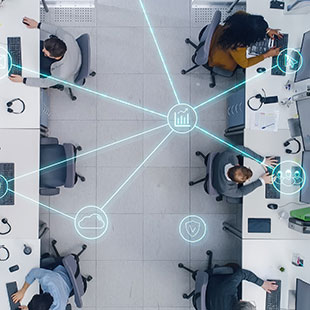
Start reprogramming your future now. Coastline can help you navigate an educational path through the alternating currents of career algorithms. We’re a direct connection to your earning potential.